Which Foods Provide Omega-3s
(and Why Do They Matter So Much?)
Omega-3 fatty acids are among the most studied nutrients in nutrition science, yet they remain one of the most commonly under-consumed in modern diets. Omega-3s are not just “healthy fats.” They are structural components of cell membranes—helping cells stay flexible, communicate properly, and regulate inflammatory signaling.
The Daily Amounts That Matter
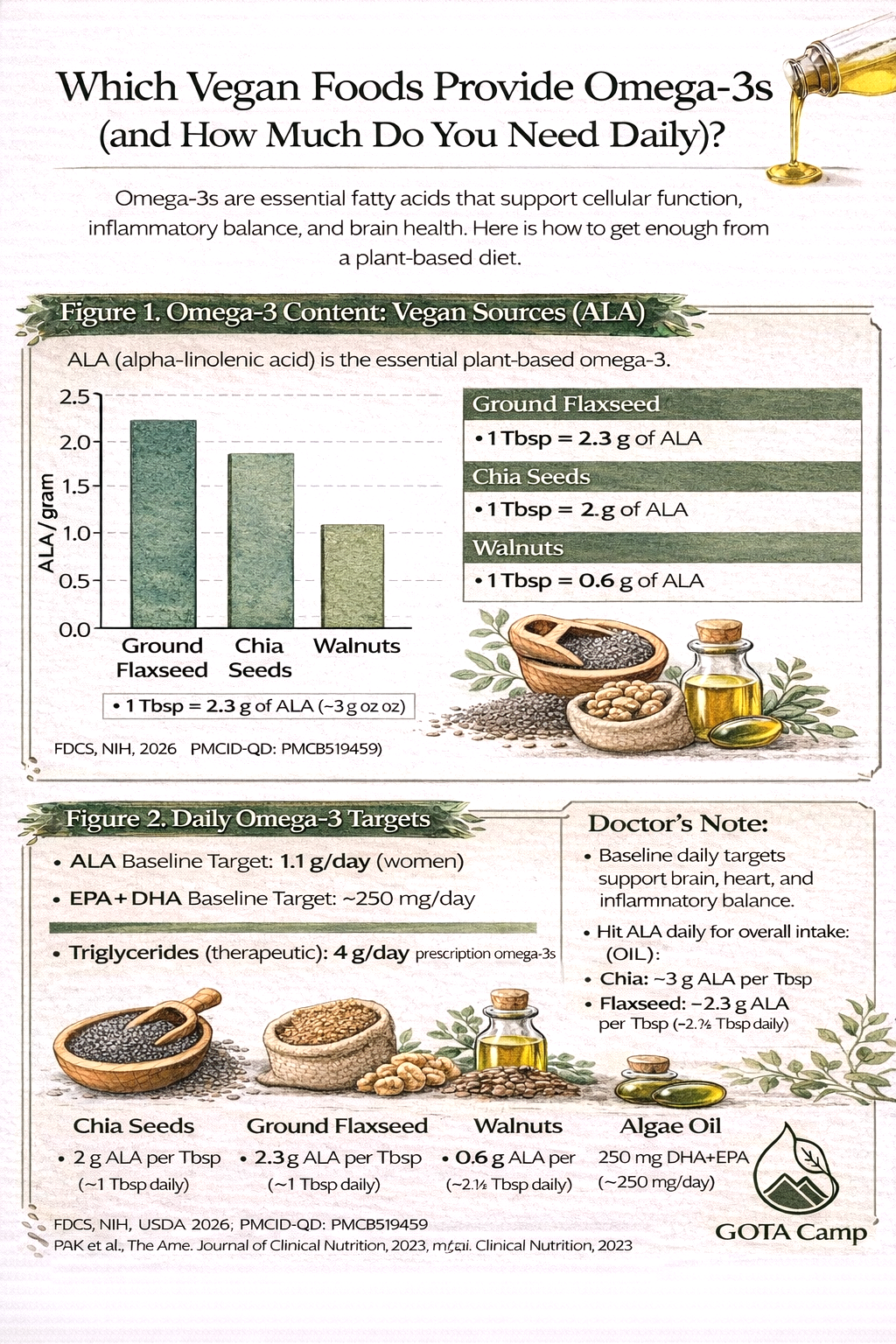
1) Your baseline essential omega-3 target (ALA). The National Academies’ Adequate Intake (AI) for ALA (the essential plant omega-3) is:
Women: 1.1 g/day ALA
Men: 1.6 g/day ALA
2) The “long-chain” omega-3 target (EPA + DHA). Many health authorities set an adequate intake around:
• ~250 mg/day EPA + DHA for healthy adults (cardiovascular baseline).
Why this matters for vegans: ALA can convert into EPA/DHA, but conversion is limited in many adults (estimates vary). That’s why an algae-based DHA/EPA source can be a practical option for some people. We cannot produce them on our own in meaningful amounts, which means they must come from food.
But why do they matter so deeply?
Omega-3s:
A Foundational Nutrient for Cellular Integrity
Every cell in the human body is enclosed by a membrane — a protective barrier that determines what enters, what leaves, and how the cell communicates. These membranes are largely composed of fats.
Omega-3s play a key role in maintaining:
membrane flexibility
cellular signaling
inflammatory regulation
tissue repair
nervous system stability
When Omega-3 intake is low, membranes can become more rigid and inflammatory signaling may increase. In other words, Omega-3s are not just a “heart supplement.” They are a cellular requirement.
Why Omega-3 Deficiency Is So Common Today
One of the major dietary shifts of the last century has been the dramatic increase in Omega-6 fats (from industrial seed oils) alongside a decline in Omega-3-rich whole foods. This imbalance matters because Omega-6 fats tend to promote inflammatory pathways, while Omega-3 fats tend to support the body’s natural resolution of inflammation.
Modern diets often create a terrain in which inflammation becomes chronic rather than temporary.
Omega-3s and Inflammation: Not Just Suppression, but Resolution
Omega-3 fats are precursors to specialized compounds known as:
resolvins
protectins
maresins
These molecules help the immune system “turn off” inflammation once it has served its purpose. Rather than simply blocking inflammation, Omega-3s help the body complete the inflammatory cycle appropriately — moving from activation into healing.
This is one reason Omega-3 intake has been studied in conditions involving chronic inflammatory burden, including cardiovascular, metabolic, immune, and neurological dysfunction.
Omega-3s and the Brain: Structural Nutrition
The brain is one of the most Omega-3-rich organs in the body. In particular, DHA (docosahexaenoic acid) is a major structural fat in:
neuronal membranes
synapses
the retina
Low Omega-3 status has been associated with impaired cognitive resilience, mood regulation challenges, and increased neuroinflammatory signaling. This is why Omega-3s are often considered foundational nutrients for:
mental clarity
nervous system repair
emotional stability
The Three Main Types of Omega-3
Omega-3s exist in three primary forms:
ALA (Alpha-Linolenic Acid) — The main plant-based Omega-3, found in seeds and nuts.
EPA (Eicosapentaenoic Acid) — Known for anti-inflammatory signaling support.
DHA (Docosahexaenoic Acid) — Critical for brain and eye structure.
The body can convert small amounts of ALA into EPA and DHA, but this conversion is often limited — which is why direct DHA/EPA sources may be beneficial in some cases.
Which Vegan Foods Provide Omega-3?
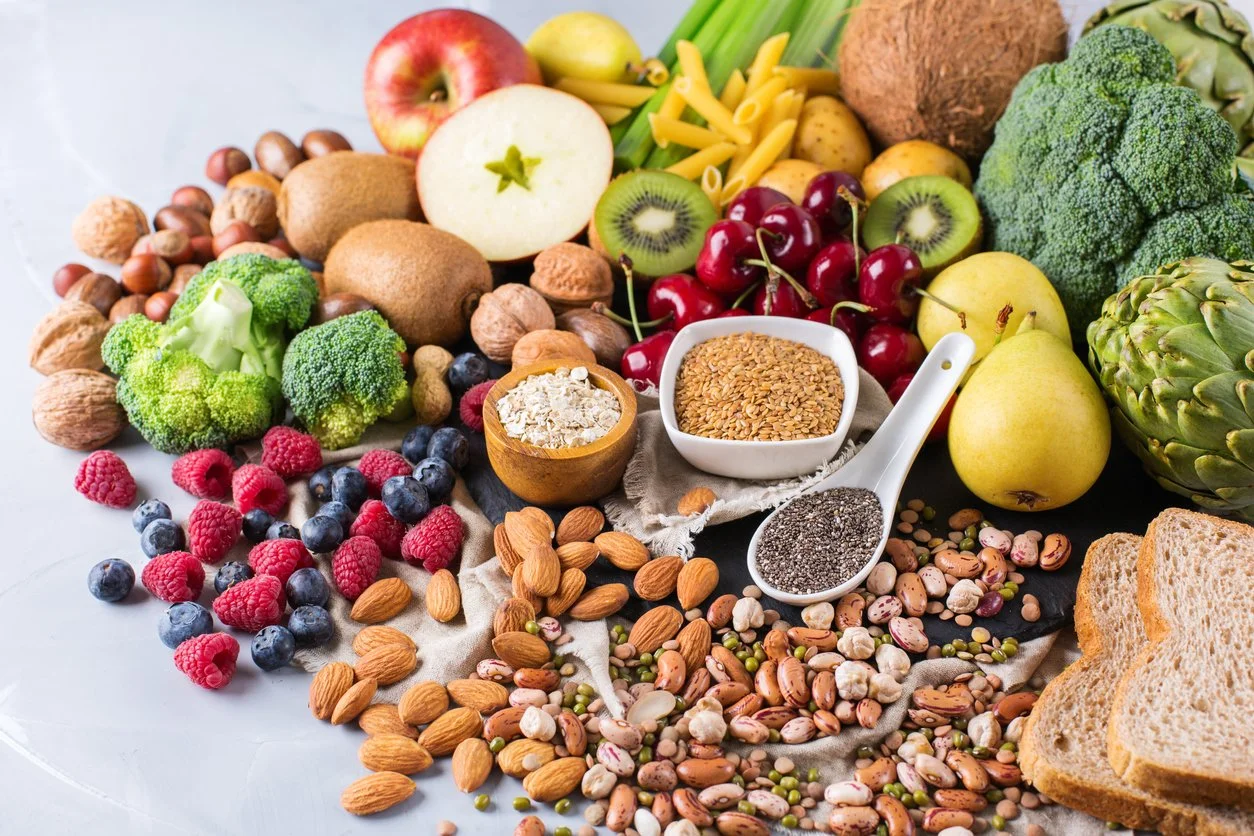
A plant-based diet can absolutely support Omega-3 intake when structured intentionally. Key sources include:
Chia Seeds
1 tablespoon provides ~2.3 g of ALA
Supports brain health and anti-inflammatory balance.
Ground Flaxseed
1 tablespoon provides ~2 g of ALA
Supports cardiovascular and hormonal regulation.
Walnuts
A 30 g handful provides ~2.5 g of ALA
Associated with cognitive and antioxidant support.
Algae Oil
Provides direct DHA + EPA
The most reliable vegan source of long-chain Omega-3s.
It’s actually the original source fish get it from!)
Clinical Pattern: What Omega-3 Support Often Looks Like in Practice
While not diagnostic, low Omega-3 intake often overlaps with patterns such as:
dry skin or mucosal dryness
inflammatory joint discomfort
mood instability or brain fog
elevated triglycerides
increased inflammatory markers
In many cases, restoring Omega-3 intake becomes part of rebuilding the nutritional foundation for healing.
Key Takeaways
Omega-3s are essential fats required for cellular membrane integrity.
Modern diets are often deficient due to excess Omega-6 intake.
Omega-3s support inflammation resolution, not just suppression.
DHA is a structural nutrient for the brain and nervous system.
Vegan Omega-3 sources include chia seeds, flaxseeds, walnuts, and algae oil.
A Simple Weekly Practice
For the next 7 days, try adding one Omega-3
1 Tbsp flaxseed daily (blend into smoothie/oats)
1 oz walnuts daily
1 oz chia (pudding, smoothie)
Optional: algae DHA/EPA to reach ~250 mg/day long-chain omega-3
Small dietary inputs can create meaningful long-term shifts in cellular terrain.