VEGUS NERVE
The vagus nerve, chronic stress, and why the body begins prioritizing survival over repair
Most people think stress is something that happens in the mind. A difficult conversation. Financial pressure. A frightening diagnosis. A demanding schedule. A sleepless night.
But to the body, stress is much more than an emotion. It is information. Every stressful experience sends a signal to the nervous system, influencing how the body allocates its energy and resources. In the short term, this response is protective. It helps us respond to challenges, adapt to change, and survive danger.
The problem arises when the body receives those signals day after day, week after week, without a clear opportunity to return to a state of safety.
Over time, the nervous system begins to change its priorities. Functions that support long-term healing may receive less attention, while systems involved in immediate survival remain on high alert.
This is where the story of the vagus nerve begins.
The Question Your Nervous System Never Stops Asking
What if one of the most important questions affecting your health is a question you never consciously ask?
Am I safe?
Although most of us rarely think about it, the nervous system is constantly evaluating the world around us for signs of safety or danger. This process occurs automatically and largely outside of conscious awareness.
Long before you have time to analyze a situation, your brain and nervous system have already begun interpreting what is happening and deciding how the body should respond.
A stressful conversation, financial uncertainty, chronic pain, poor sleep, a frightening diagnosis, or even a significant drop in blood sugar can all influence how the nervous system perceives its environment. While these experiences may seem unrelated, they often activate many of the same biological pathways involved in the stress response.
When safety is perceived, the body is free to invest resources into digestion, tissue repair, immune regulation, hormone balance, and restorative sleep. When danger is perceived, however, those same resources are redirected toward immediate survival.
From a biological perspective, staying alive becomes more important than healing.
The Nerve That Helps the Body Feel Safe
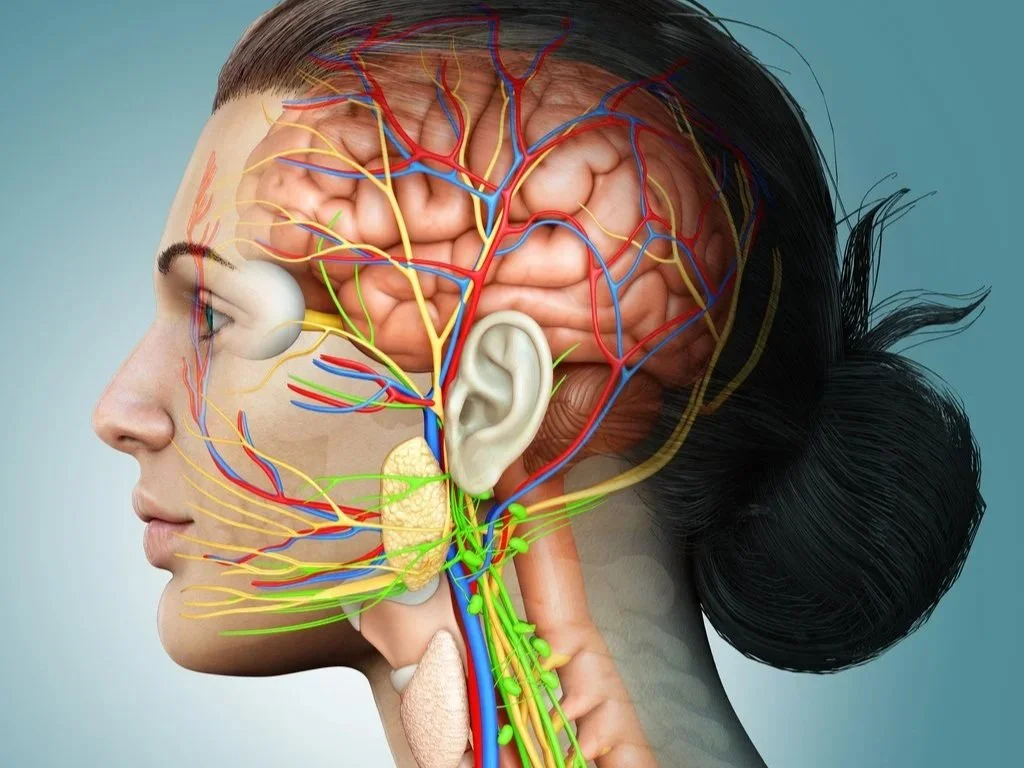
Hidden within the body is one of the most important communication networks you've probably never thought about: the vagus nerve.
Often referred to as the “wandering nerve,” it travels from the brain through the neck, chest, and abdomen, connecting many of the body's most important organs along the way.
Researchers now recognize that this remarkable nerve plays a central role in regulating digestion, heart rate, inflammation, immune activity, stress resilience, and even aspects of emotional well-being.¹
In many ways, the vagus nerve functions as a messenger between the brain and the rest of the body. When vagal activity is healthy, it helps communicate a powerful message throughout the system: The danger has passed.
As a result, heart rate slows, digestion becomes more efficient, inflammation is more tightly regulated, and the body is able to devote more energy toward repair and recovery.
This is why the vagus nerve has become such an important topic in modern health research. It appears to sit at the intersection of many systems that determine whether the body remains in a defensive state or shifts into a restorative one.
Is Your Body Fighting a Lion That Doesn't Exist?
Imagine encountering a lion in the wild. Within seconds, your heart rate would increase, your breathing would become faster, blood sugar would rise, and your muscles would prepare for action.
At the same time, digestion would slow and other non-essential functions would temporarily take a back seat.
From a survival standpoint, this response is remarkably intelligent. The problem is that today's lions rarely have teeth.
Instead, they often look like chronic stress, financial pressure, unresolved grief, relationship difficulties, poor sleep, information overload, chronic illness, or a nervous system that never fully gets a chance to rest.
Although these stressors may seem very different from a physical threat, the body often responds to them using many of the same biological pathways. And when those pathways remain activated long enough, the body begins changing its priorities.
Not because it wants to.
Because it believes it has to.
Why Stress Can Change Digestion Without Changing Your Diet
Most people assume digestive symptoms are caused exclusively by food, If bloating appears, they blame what they ate. If reflux develops, they blame the meal. If constipation shows up, they begin searching for dietary triggers.
While food certainly matters, the nervous system may be influencing digestion far more than most people realize.
The vagus nerve helps regulate stomach acid production, digestive enzyme secretion, intestinal motility, and communication throughout the digestive tract.² When the body feels safe, it is more willing to invest energy into digestion and nutrient absorption. When the body perceives danger, those priorities begin to change.
Research suggests that chronic stress can alter digestive function, influence gut motility, and affect the integrity of the intestinal barrier.³
The result may feel familiar.
Food suddenly seems heavier.
Bloating becomes more frequent.
Reflux appears more easily.
Bowel habits become less predictable.
The diet may not have changed.
But the nervous system has.
Why Stress Makes You Crave Sugar
One of the lesser-known consequences of chronic stress is the effect it can have on blood sugar regulation.
When the nervous system perceives danger, stress hormones such as cortisol and adrenaline help release glucose into the bloodstream, ensuring that fuel is immediately available if action is required.⁴ From a survival standpoint, this response makes perfect sense. If a lion were chasing you, your body would need quick access to energy.
The problem is that many modern stressors never fully resolve. As a result, the body may continue behaving as though it needs emergency fuel, even while sitting at a desk, lying in bed, or driving home from work.
Over time, this can create a frustrating cycle. Many people begin craving sugar more frequently, relying on caffeine to maintain energy, or experiencing dramatic highs and lows throughout the day. They feel exhausted but restless, tired but unable to relax.
What began as a protective response slowly becomes a metabolic burden.
The FIre Alarm That Never Turns Off
One of the most fascinating discoveries in modern medicine is that the nervous system and immune system are constantly communicating with one another.
For many years, scientists believed inflammation was controlled primarily by immune cells. Today, researchers understand that the vagus nerve plays an important role in helping regulate inflammatory activity throughout the body through what is known as the inflammatory reflex.⁵
In simple terms, the nervous system helps determine how intensely the body responds to stressors, injuries, and challenges.
Imagine a building where the fire alarm never stops ringing. At first, the alarm serves an important purpose. But eventually, the constant signal becomes a problem of its own.
Something similar may happen inside the body.
When the nervous system remains stuck in a state of chronic vigilance, inflammatory signaling may remain elevated for longer than necessary.⁶ This may help explain why prolonged stress is frequently associated with fatigue, brain fog, body aches, slower recovery, and a general sense that the body is struggling to regain balance.
The nervous system doesn't just influence how we feel. It influences how we heal.
The Question Most People Never Ask
When people struggle with digestive symptoms, fatigue, inflammation, hormone imbalance, or poor sleep, the first question is often:
"What supplement should I take?"
And while there are certainly nutrients, herbs, and therapies that may be helpful, another question may be even more important: Does my nervous system feel safe enough to heal? Because healing requires a different physiology than survival.
The body repairs most effectively when breathing slows, sleep deepens, digestion improves, and the nervous system receives consistent signals that the emergency is over.
For many people, the goal is not simply to eliminate symptoms. The goal is to help the body remember that it is safe again.
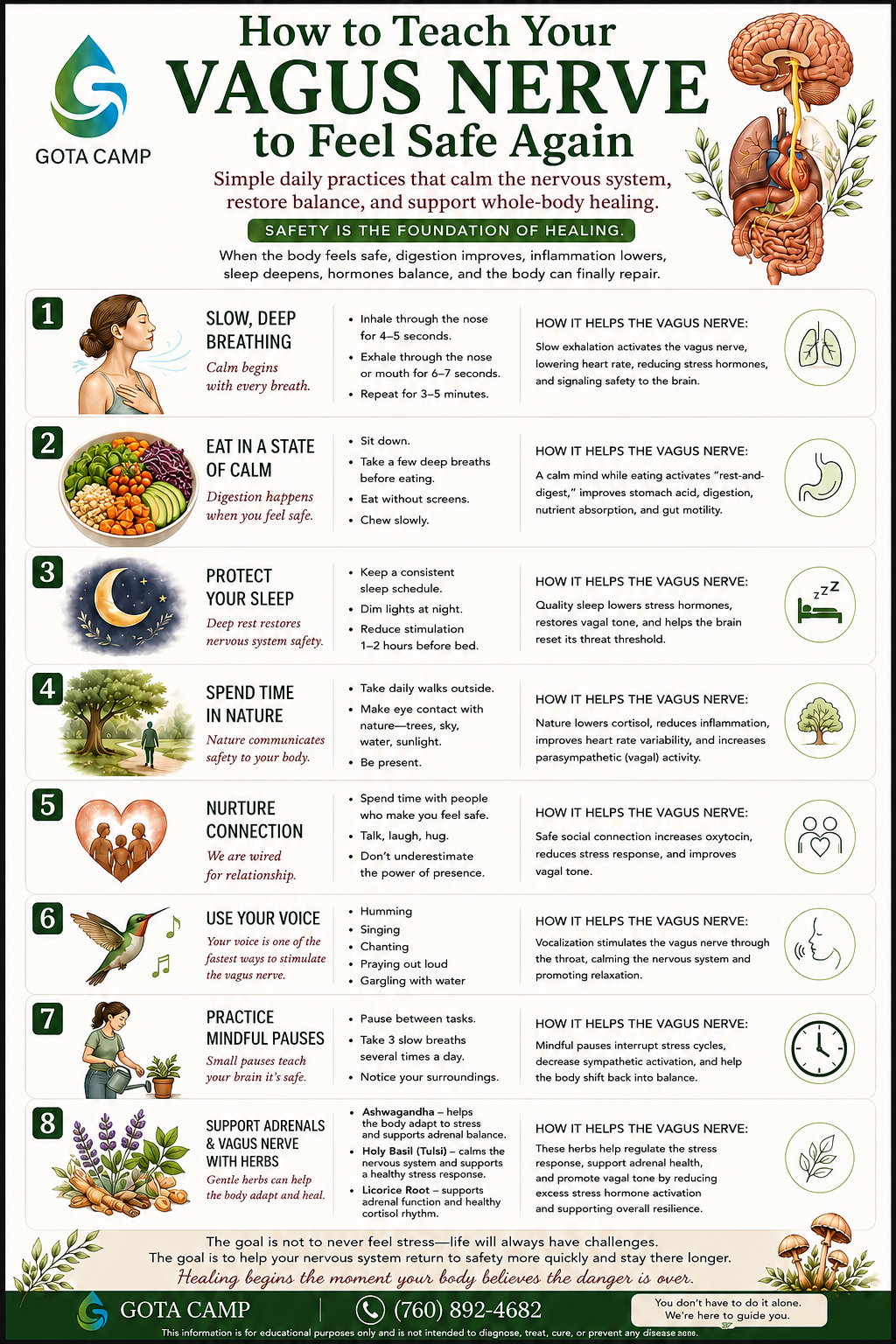
How Do We Teach the Nervous System Safety Again?
The nervous system learns through repetition. It learns through patterns. It learns through experience. This is one reason simple daily practices can have such profound effects over time.
Consistent sleep schedules, regular meals, morning sunlight, movement, meaningful relationships, prayer, time in nature, and periods of genuine rest all communicate something important to the body:
You are safe.
Not once.
But repeatedly.
Day after day.
These practices may seem ordinary, yet they provide the nervous system with the very signals it has been searching for all along.
References
¹ Breit S, et al. Front Psychiatry. 2018 • ² Konturek SJ, et al. J Physiol Pharmacol. 2011 • ³ Cryan JF, et al. Physiol Rev. 2019 • ⁴ Hall JE. Guyton and Hall Textbook of Medical Physiology • ⁵ Tracey KJ. Nature. 2002 • ⁶ Pavlov VA, Tracey KJ. Nat Rev Immunol. 2012